Kaposi Sarcoma
Kaposi sarcoma is an unusual cancer, with an unusual cause — a common virus that only causes trouble when the immune system is not at its best. Understanding it well changes the treatment completely, and for most patients today the outlook is far better than its reputation suggests.
What Kaposi sarcoma is — in plain words
Kaposi sarcoma (KS) is a cancer of the small blood and lymphatic vessels. It usually shows up as purple, red or brown patches and lumps on the skin, but it can also appear in the mouth, in the lymph nodes, and inside organs such as the lungs and the gut.
Unlike most cancers, KS has a clear cause: infection with a virus called human herpesvirus 8 (HHV-8, also written KSHV). This virus is fairly common in some parts of the world and most people who carry it never develop any disease at all. KS arises only when the immune system, for one reason or another, is not keeping the virus in check.
It is important to say this clearly: HHV-8 is not spread casually. People share the virus through close, prolonged contact — most often saliva — and in some settings sexually or through blood. Carrying it is not a moral statement, and developing KS is not anyone's fault.
The four clinical forms — and why they matter
The same virus, in different immune contexts, behaves in four quite different ways. Recognising which form you have is the first step to the right treatment.
Classic KS
Seen mostly in older men from Mediterranean, Middle Eastern and Eastern European backgrounds. It is slow, often limited to a few lesions on the lower legs, and behaves more like a chronic skin condition than an aggressive cancer. Many men live with it for decades.
Endemic (African) KS
Occurs across parts of sub-Saharan Africa, in adults and sometimes in children. It can be limited to the skin or, particularly in children, can be more aggressive with lymph node involvement.
Iatrogenic KS
Develops in people taking immune-suppressing medicines, classically after a kidney or other organ transplant. The lesions appear because the immune system has been deliberately quietened to protect the transplant.
Epidemic (AIDS-related) KS
Linked to untreated or poorly controlled HIV infection. In the early years of the HIV epidemic it was common and aggressive. Today, with effective HIV treatment, it is much less common and usually much more controllable.
Who tends to develop it
The risk of KS depends almost entirely on two things: whether a person has been infected with HHV-8, and how well their immune system is working. Classic KS occurs in older adults with otherwise normal immunity, where slow age-related immune drift seems to be enough to let the virus reactivate. Iatrogenic and AIDS-related forms occur when the immune system is more profoundly suppressed.
For people living with HIV who are on effective antiretroviral therapy with a fully suppressed viral load and a healthy CD4 count, the risk of developing KS today is very low — a fact that should be more widely known.
Signs and symptoms to take seriously
Skin lesions
Purple, red, brown or dark-pink patches, plaques or nodules. Painless at first. They can appear anywhere — the legs and feet are classic in older men, the face and trunk are more common in AIDS-related disease.
Lesions in the mouth
Dark patches on the palate or gums. These can become tender and interfere with eating.
Leg swelling
When lesions involve the lymphatic vessels, the legs (or, less often, the face) can swell — sometimes more troublesome than the skin lesions themselves.
Cough, breathlessness, gut symptoms
If KS involves the lungs or the digestive tract, it can cause a dry cough, shortness of breath, gut bleeding or abdominal pain. These are signs that need prompt assessment.
A new purple or dark patch on the skin is far more often something benign — a bruise, a mole, a small skin haemorrhage. But persistent, growing or multiple lesions, particularly in someone with known immune compromise, deserve a proper look.
"When patients tell me they have been carrying this diagnosis quietly, ashamed of it, I always wish they had come sooner. There is no shame here. This is a disease of the immune system, and we have very good tools to fix the immune system. Please come early."
How Kaposi sarcoma is diagnosed
The diagnosis is straightforward once the right tests are done — and they should be done early, before the lesions multiply.
- Skin biopsy — a small piece of a lesion, taken under local anaesthesia, is sent to the lab. Under the microscope the pathologist sees spindle-shaped cells and characteristic slit-like vascular spaces.
- HHV-8 immunostaining (LANA-1) — a specific stain confirms that the lesion's cells are infected with HHV-8. This makes the diagnosis essentially certain.
- HIV testing — every patient with newly diagnosed Kaposi sarcoma should be offered an HIV test, regardless of how they look or how they live. This is a routine medical step. If positive, it changes the treatment for the better, because antiretroviral therapy itself is part of the cure.
- Assessment of the immune system — for people on transplant medication, a discussion with the transplant team about whether immunosuppression can be safely reduced. For people with HIV, a CD4 count and HIV viral load.
- Looking for internal disease — a chest X-ray, sometimes a CT scan, and (if there are gut symptoms) an endoscopy or colonoscopy, to see whether KS is present beyond the skin.
How Kaposi sarcoma is treated
The treatment of KS depends almost entirely on two questions: which form is it, and how extensive is it? Treating the immune system is, for most patients, at least as important as treating the lesions themselves.
Restoring the immune system — the most powerful treatment of all
For AIDS-related KS, the single most effective treatment is fully effective antiretroviral therapy (ART). For many patients with limited skin disease, ART alone — without any chemotherapy — leads to the lesions fading and disappearing over months. This is not a small fact; it is a remarkable one, and it is the reason AIDS-related KS is now an uncommon and usually controllable disease in countries where ART is freely available.
For iatrogenic KS in transplant patients, working with the transplant team to reduce immunosuppression (or to switch to a regimen with mTOR inhibitors such as sirolimus, which themselves have anti-KS activity) often causes the lesions to regress, sometimes completely.
Local treatments for limited skin disease
When there are only a few lesions, or when specific lesions are particularly bothersome, local treatments work well and are well-tolerated.
Localised radiation
Highly effective for individual lesions. Particularly useful in the mouth, on the face, or on the lower legs. A short course gives a durable response.
Intralesional chemotherapy
Small injections of vinblastine directly into a lesion can flatten it. Useful for cosmetically sensitive areas.
Cryotherapy
Freezing of small superficial lesions. Quick, in the clinic, no anaesthetic.
Topical treatments
Selected creams (for example alitretinoin) and other topical agents can help certain lesions, particularly when systemic treatment is not needed.
Systemic treatment for extensive or visceral disease
When KS is widespread, when it is rapidly progressing, or when it involves the lungs or the digestive tract, systemic treatment is needed.
- Liposomal doxorubicin — the standard first-line chemotherapy for advanced KS. Given as an intravenous infusion every two to three weeks, it is generally well-tolerated, with much less of the heart toxicity and hair loss seen with older anthracyclines.
- Paclitaxel — an effective alternative or second-line option, particularly when liposomal doxorubicin is not available or has stopped working.
- Pomalidomide — an oral immunomodulator that has shown real activity in KS, including in patients whose disease has progressed on chemotherapy.
- Immunotherapy — checkpoint inhibitors are an emerging option in selected patients, particularly those with refractory disease. The evidence base is growing.
The HIV connection — said openly
Some patients delay coming in because they are afraid of what an HIV test will mean — socially, for their family, or for themselves. We want to say this plainly: an HIV diagnosis today is not what it was thirty years ago. With modern antiretroviral therapy, people with HIV live full, ordinary, long lives, have HIV-negative children, and have a life expectancy close to that of anyone else. The test itself is simple and confidential.
If KS is the first sign of an underlying HIV infection — and it sometimes is — then finding it is good news, because both conditions can now be treated together effectively. The shame and silence around HIV cost lives. The medicine itself, in the year 2026, does not.
What the outlook honestly looks like
The outlook depends heavily on the form and the extent of disease — and on how well the underlying immune problem can be corrected.
Classic KS
Generally an indolent disease. Many men live with it for decades, often dying of unrelated causes. Treatment is aimed at troublesome lesions rather than the disease as a whole.
Iatrogenic KS
Often regresses substantially when immunosuppression is reduced or switched. Most patients do very well.
AIDS-related KS
With effective ART and modern treatment, most patients achieve long-term control or complete remission. The outlook today is genuinely good.
Extensive or visceral disease
More serious — but liposomal doxorubicin and the newer options give meaningful responses in the majority. Many patients are alive and well years later.
Numbers are averages, and the picture is more individual than any chart. We will be honest with you about what the realistic range looks like in your specific situation.
Life during treatment
Most patients with Kaposi sarcoma continue much of their normal life. Local treatments (radiation, cryotherapy, intralesional injections) are usually outpatient procedures with minimal disruption. Systemic chemotherapy with liposomal doxorubicin is given as a short infusion every few weeks; side effects are usually modest — some fatigue, occasional mouth sores, low blood counts checked between cycles.
For patients also starting or restarting antiretroviral therapy, the first few months can occasionally bring a flare of inflammation around existing KS lesions (immune reconstitution inflammatory syndrome, IRIS). This is a sign that the immune system is waking up and engaging with the virus — it can be managed and is, in the long run, a good sign rather than a bad one.
Follow-up
After treatment, follow-up is regular but not arduous: clinic visits every few months, with attention to the skin, the mouth, the lymph nodes, and a chest examination. For patients with HIV, ongoing ART with regular CD4 and viral load monitoring is the key to keeping KS away long-term. For transplant patients, the right balance of immunosuppression is a continuing conversation with the transplant team.
A word on dignity
Few cancers have carried as much stigma as Kaposi sarcoma did in the 1980s, when it became visible on the faces of young men dying of an illness no one yet understood. The science has moved on. The medicine has moved on. Our duty as doctors is to make sure the conversation moves on too — to treat this disease, and the people who have it, with the same straightforwardness and the same warmth we offer to anyone else who walks into the clinic.
Worried about a new skin lesion, or already diagnosed with KS?
Bring your reports, and any questions you have. The conversation is confidential, the assessment is straightforward, and the treatment options today are better than most people realise.
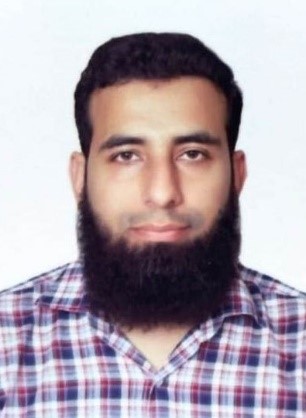
Medically reviewed by
Dr. Rehan Abdullah
Dr. Rehan Abdullah is a dual-trained clinical and radiation oncologist with over a decade of experience treating both solid tumours and hematologic malignancies. He serves as Consultant Oncologist at INMOL Hospital and sees patients at Farooq Hospital and Healthnox Medical Center, Lahore. Read full profile →
This page is patient education, not a substitute for an in-person consultation. Cancer care must be individualised. Read our medical disclaimer →